


 Email the author
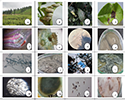
Incidence and identification of foliar fungal pathogens from tea gardens of Sikkim using foldscope as research tool
Abstract
Keywords
Full Text:
PDFReferences
Agnihothrudu, V. and Chandra Mauli, B. “Blister blight of tea, its control and future line of research”. In, proceeding of the International Symposium on Tea science. Ed. Yamanishi, T. Shizuoka Japan. (1991) 655-59.
Agnihothrudu, V. Some aspects of Mycological investigations at Tocklai. Two & a Bud 10 (4) (1963) 27-31.
Agnihothrudu, V. A world list of fungi reported on tea (Camellia spp.). J Madras Univ. 34: (1964) 155-271.
Agrios, G. N. Plant Pathology. 5th ed. Elsevier Academic Press, San Diego. California. (2005) Pp.3-15.
Alexopoulos, C. J., Mims, C. W. and Blackwell M. Introductory Mycology. Fourth Edition. John Wiley & Sons Inc. New York. (1996) Pp. 245-436.
Allen, T. Bluhm, B., Conner, K., Doyle, V., Price T., Sikora, E., Singh, R., Spurlock, T., Peterson, T. M. and Wilkerson, T. First description of the causal agent of taproot decline of soybean; an emerging disease in the southern US. Plant health progress. 18 (2017) 35-40.
Aneja, K. R. Experiments in Microbiology Plant Pathology. New Age Publisher. Vol. 4 (2001) 157-162.
Barthakur, B K, Dutta, P, Sarmah, S R and Singh, K. Fusarium infestation in tea. Two bud. 48 (2001) Pp.42.
Barnett, H. L. and Hunter, B. B. Illustrated genera of imperfect fungi. 4th edn. Laskin, AI and Lechevalier. HA. (2000) Pp.1-197.
Bhutia, L.P., Chakraborty, B.N. and Chakraborty, U. Management of charcoal stump rot disease using AMF and PGPR in Temi Tea estate, Sikkim. J. Mycol. Pl. Pathol. 44(2): (2012) 1-12.
Bilgrami, K. S., Jamaluddin S. and Rizwi M. A. Fungi of India: list and references. New Delhi. India: Today and Tomorrow’s Printers & Publishers. (1991).
Booth, C. The Genus Fusarium. The Commonwealth Mycological Institute. England. (1971) Pp. 273.
Butler, E.J.and Bisby G.R. The Fungi of India. Imperial Council of Agricultural Research in India. Sc. Monogr. Coun. Agric. Res. India II XVII, (1931) p. 237.
Chandra Mouli, B. Common names for the diseases of tea. Phytopathology Newsletter. American Phytopathological Society. (1995).
Chen Zongmao and Chen Xuefen. A world list of pathogens reported on tea plant. Journal of Tea Science. 9 (1): (1989). 73-88.
Cannon, P. F., Damm U, Johnston P. R. and Weir B. S. Colletotrichum-current status and future directions. Studies in Mycology. 73 (2012) 181–213
Chen, Z. M. and Chen X. F., The diagnosis of tea diseases and their control in Chinese. Shanghai Sci. Tech. publishers, Shanghai, China. Pp. (1990) 73-88.
Cybulski, J.S., Clements J. and Prakash M. Foldscope: Origami-Based Paper Microscope. PLoS ONE 9(6): (2014), e98781. https://doi.org/10.1371/journal.pone.0098781
Dugan, F. M. The Identification of Fungi: An Illustrated Introduction with Keys Glossary and Guide to Literature. The American Phytopathological Society. Press, St. Paul. Minnesota. (2006).
Eden, T (1976). Tea. Longman. 236pp.
Ellis, M. B. More Dematiaceous hyphomycetes. The Commonwealth Mycological Institute, England. (1976). Pp. 507.
Finlay, A. R. and Brown A. E. The relative importance of Colletotrichum musae as a crown‐rot pathogen on Windward Island bananas. Plant Pathology. 42(1) (1993) Pp.67-74.
Gadd, C. H. and Loos C. A. The basidospores of Exobasidium vexans. Trans. Br.Mycol. soc.33: (1948) 229-233.
Gadd, C. H. The common diseases of tea. Tea Research Institute of Ceylon, Monographs on Tea Production in Ceylon No. 2 (cit. EDEN, 1967), (1949) 94.
Ganga, D. Sinniah C E, Munasinghe N, Mahadevan S K, Jayasinghe D C and Kulatunga M. Recent incidence of collar canker and dieback of tea (Camellia sinensis) caused by Fusarium solani species complex in Sri Lanka. Australasian Plant Disease Notes December. (2017) 12:41
Ghosh, and Hazra N. Annual Scientific Report of Darjeeling Tea Research Centre, Tea Board, Darjeeling. (1991) Pp 27.
Gilman, J. C. and Joseph C. A Manual of Soil Fungi. Biotech Books Delhi, India. (2008).
Gilman, J. C. A Manual of Soil fungus, 2nd Indian edition. Joseph C. Gilman. Biotech Books. New Delhi. (2001).
Goodchild, N.A. Stem disease. Annual report. Tea Research Institute of East Africa (1952) 24. pp
Hainsworth, E. Tea pests & disease & their control. W. Heffer 8s Sons Ltd., Cambridge. (1952) pp 130.
Hamaya, E. Diseases of tea plant in Japan and their control. Rev. Pl. Prot. Res. Japan. 14 (1981) 96-111
Heinrich, L. D. “Diseases and Pests of Tea: Overview and Possibilities of Integrated Pest and Disease Management”. (Journal of Agriculture and Rural Development in the Tropics and Subtropics. 101(2000) Pp. 13-38
Hou, Y, Ma X, Wan, W, Long N, Zhang J. and Tan Y. “Comparative Genomics of Pathogens Causing Brown Spot Disease of Tobacco: Alternaria longipes and Alternaria alternate”. PLoS ONE. 11(5): (2016) e0155258. https://doi.org/10.1371/journal.pone.0155258
Hsieh, W.H. “Root and basal stem rots of sugarcane: a new disease caused by Xylaria sp”. Report of the Taiwan Sugar Research Institute. 87. (1980). Pp.15-24.
Hyde, K. D. Colletotrichum: a catalogue of confusion. Fungal Divers. 39 (2009) 1–17.
Isshiki, A, Akimitsu K, Yamamoto M and Yamamoto H. Endo-poly galacturonase is essential for citrus black rot caused by Alternaria citri but not brown spot caused by Alternaria alternata. Molecular Plant-Microbe Interactions. 14(6). (2001) Pp.749-757.
Keith, L, Ko W.H. and Sato D.M. Identification guide for diseases of tea (Camellia sinensis). (2006).
Krik, P M, Cannon P F, David J C and Stalper J A, (eds.) Ainsworth & Bisby’s Dictonary of Fungi, 9th Edition CABI Publishing. (2001).
Leslie, J. F. and Summerell B.A. The Fusarium Laboratory. Manual. Blackwell Publishing, Oxford, UK. (2006).
Lisa Keith, Wen-Hsiung, and Dwight M Identification Guide for Diseases of Tea (Camellia sinensis) Plant Disease Oct. (2006) PD-33.
Mur, L A J, Haucka B, Wintersa A, Healda J, Lloyda A J, Chakrabortyb U and Chakrabortyb B N. “The development of tea blister caused by Exobasidium vexans in tea (Camellia sinensis) correlates with the reduced accumulation of some antimicrobial metabolites and the defence signals salicylic and jasmonic acids”. Plant Pathology. 64: 1471–1483 Doi: 10.1111/ (2015) pp.12364.
Mann, H. H. and Hutchinson C. H. Red rust, (2ndedn) I.T.A. Bull. (1904). p. 26
Martinez, A. T. and Ramirez C. Rhizosphaera oudemansii (Sphaeropsidales) associated with a needle cast of Spanish Abies pinsapo. Mycopathologia. 83(3) (1983) Pp. 175-182.
Moretti, A. Taxonomy of Fusarium genus: A continuous fight between lumpers and splitters. Zbornik Matice Srpke Zaprirodnme nauke. (117): (2009) 7-1.
Muraleedharan, N. and Chen Z. M. Pests and diseases of tea and their management. Journal Plant Crops .25 (1997)15-43.
Myeong, H. N., Myung S., Park, Hyun S. K., Tae I K., and Hong G. K. Cladosporium cladosporioides and C. tenuissimum Cause Blossom Blight in Strawberry in Korea. Microbiology. Sep; 43(3): (2015) 354–359. doi: 10.5941/MYCO.2015.43.3.354
Nelson, P. E., Dignani M. and Anaissie E. J. Taxonomy, biology, and clinical aspects of Fusarium species". Clin Microbiol Rev. 7(4): (1994) 479–504.
Nelson P. E., Toussoun T. A. and Marasas W. F. O. Fusarium species: An Illustrated Manual for Identification. The Pennsylvania State University Press, University Park and London, UK. Simmons, E.G. 2007. Alternaria. An identification manual. CBS Biodiversity Series 6. CBS Fungal Biodiversity Centre. Utrecht, The Netherlands. (1983).
Nutman, F.J. and Roberts F.M. Investigations on a disease of Coffea arabica caused by a form of Colletotrichum coffeanum Noack: I. Some factors affecting infection by the pathogen. Transaction of the British Mycology Society. Vol.43(3), (1966) p-489-505.
Petch, T. Diseases of the tea bush. Macmillan and Co. Ltd. London. (1923) Pp. 220.
Petrini, L. and Petrini O. Xylariaceous Fungi as endophytes. Sydonia 38; (1985) 216-234.
Proffer, T. J. Xylaria root rot of urban trees caused by Xylaria polymorpha. Plant Disease. 72(1), (1988).
Ramjegathesh, R. and Ebenezar E. G. Morphological and physiological characters of Alternaria alternata causing leaf blight disease of onion. International Journal of Plant Pathology. 3(2), (2012) pp. 34-44.
Ramlogun, H. G. S. The pests and disease of tea in Mauritius. Reveu Agricola et Sucriere de J'lle Maurice. 50 (1971) 48-67.
Rogers, J. D. The xylariaceae; systematic, biological and evolutionary aspects. Mycologia. 71 (1979) 1-42.
Rogers, J. D Xylaria acuta, Xylaria cornu-damae and Xylaria mali in Continential United states. Mycologia. 76 (1984) 23:33.
Sarmah, K. C. Diseases of tea and associated crops in north east India. Indian Tea Association, Scientific Department, Tocklai Experimental Station Memorandum. No 26. (1960) Pp. 68.
Sarmah, S R, Dutta P, Bhattacharya P. N., Payeng B. and Tantl A. J. “Growth habit of Tea pathogen and evaluation of relative susceptibility of selected Tea cultivars”. Int. Res. J. Biological Sci. Vol 5 (7), (2016).
Shirsath, L. P. and Patil U. K. Prevalence of Fungal Phytopathogens on Transgenic Bt Cotton Plant: Isolation and Characterization. Int.J.Curr.Microbiol.App.Sci.5(9): (2016). 682-693. doi:http://dx.doi.org/10.20546/ijcmas.2016.509.079
Satyanarayana G and Barua G. C. S. Red rust of tea [India]. Two and a Bud. (1978).
Shafique, S., Shafique S., Sahar S. and Akhtar N. First report of Cladosporium cladosporioides instigating leaf spot of solanum melongena from pakistan. Pak. J. Bot. 51(2). (2019) Pp.755-759.
Simmons, E.G. Alternaria; An identification manual. CBS Biodiversity Series 6. CBS Fungal Biodiversity Centre, Utrecht, The Netherlands. (2007).
Sivakumar, A and Kathiresan K. Phylloplane fungi from mangroves. Indian J. Microbiol.30: (1990) 229-231.
Subba Rao. Blister blight of tea in South India. United Planeters Association of Southern India. (1946).
Sudoi, V and Langat, J K. A report of identification of fungi and bacteria associated with the tea plant in Kenya. Tea. 13(2). (1992) 76-83.
Sutton, B C. The Coelomycetes. Fungi Imperfecti with Pycnidia Acervuli and Stromata. Commonwealth Mycological Institute. England. (1980). Pp. 696.
Parashurama, T R and Shivanna, M S Occurance of Cladosporium leaf blight on Rubia cordifolia in Bhadra wildlife sanctuary, south india. Indian Phytopath. 66(3): (2013)287-293.
Thangavelu, R, Sundararaju, P and Sathiamoorthy, S Management of anthracnose disease of banana caused by Colletotrichum musae using plant extracts. The Journal of Horticultural Science and Biotechnology. 79(4). (2004) Pp.664-668.
Thind, K S and Dargan, J S Xylariaceae of India–VI. Indian Phytopathol. 31: (1978) 490–496.
Torres, D E, Rojas-MartõÂnez, R I, Zavaleta-M E, Guevara F P, MaÂrquez G J and PeÂrez M C. Cladosporium cladosporioides and Cladosporium pseudocladosporioides as potential new fungalantagonists of Puccinia horiana Henn., the causal agent of chrysanthemum white rust. PLoS ONE. 12(1): (2017). e0170782. doi:10.1371/journal.pone.0170782.
Tunstall, A C and Sarmah, K C. Black rot of tea in North East India. Memo. no. 19. Ind. Tea Assoc. (1947). Pp. 1-26.
Tzong, M C and Shin, F. Disease of Tea and Their Control in the People’s Republic of China. Tea Research Institute, Agricultural Academy of China Hangzhou Zhejiang Provience People’s Republic of China. America Phytopathology society, Plant Disease.vol.66. No.10. (1982).
U’Ren, J M, Miadlikowska, J, Zimmermana N B, Lutzoni F, Stajich J E and Arnold A E. Contribution of North American endophytes to the phylogeny, ecology and taxonomy of Xylariaceae. Mol. Phylogenet. Evol. 98: (2016) 210-232.
Udayanga, D, Manamgoda,D S, Liu X Z, Chukeatirote E and Hyde, K. D. What are the common anthracnose pathogens of tropical fruits? Fungal Divers. 61: (2013) 165–179.
Walker, C, Muniz M F B, Rolim, J M, Martins, R R O, Rosenthal V C, Maciel C G, Mezzomo R and Reiniger L R S. Morphological and molecular characterization of Cladosporium cladosporioides species complex causing pecan tree leaf spot. Genetics and Molecular Research. 15(3), (2016) Pp.1-11.
Wang, Y. Wang, X. and Hao, X. Diverse Colletotrichum Sp cause anthracnose of tea plnats (Camellia sinensis (L.) O. Kuntze) in China. Scientific reports, Nature. (2016).
Watt, A. and Mann, H, H. The pests and blights of tea plant. Govt. printing press, Calcutta, India. (1903) 429.
Watt, G. The pests and blights of tea plants. Cal. (1898). Pp. 443-459.
Williams, W J. Simplified Fungi Identification Key. Special Bulletin 37, (2001). The University of Georgia. http://plantpath.caes.uga.edu/extension/documents/fungikey.pdf
Ying, J C., Qing, M., Liang, Z. and Hua, R. T. Phylogenetic and morphological characteristics of Alternaria alternata causing leaf spot disease on Camellia sinensis in China. Australasian Plant Pathology (2018). https://doi.org/10.1007/s13313-018-0561-0
Yu, C W, Xin Y. H. L. W., Bin X, Xin C. W. and Ya J. Y. Diverse Colletotrichum species cause anthracnose of tea plants (Camellia sinensis (L.) O. Kuntze) in China. Scientific Reports | 6:35287 | (2016). DOI: 10.1038/srep35287
Zhou, L. X. and Xu W. X. First report of Alternaria alternata causing leaf spots of tea (Camellia sinensis) in China. Plant disease. 98(5). (2014) Pp.697-697.
DOI: https://doi.org/10.21746/aps.2019.8.9.1

Copyright (c) 2019 Annals of Plant Sciences

This work is licensed under a Creative Commons Attribution-NonCommercial-NoDerivatives 4.0 International License.

